
❋
Dancing at the Heart of the Wound
A circle for Indigenous women remembering the strength carried in our bones
Gather · Ground · Go Deep · Release · Rise
If you carry grief while you carry others, this circle is for you. You are the one people come to. You hold the crisis calls, the court dates, the funerals, the families with nowhere else to turn. And underneath all of that, you are carrying your own grief, your grandmother's grief, and the grief of what is still happening to our people right now. This circle is not for the version of you that shows up for everyone else. It is for the woman underneath her, the one who has been carrying too much for too long.
Who holds you while you are holding everyone else? Indigenous women in helping roles carry vicarious grief from the work, the grief of our own lineages, and the grief of what is unfolding around us right now, often with nowhere to set any of it down. This circle is a place to set it down in the company of women who already know the weight.
❋ Dancing at the Heart of the Wound is what we built for the Indigenous women who are holding our communities
right now:
doctors, nurses and other medical profession
advocates, case managers, and suicide-prevention workers
doulas
educators
natural helpers
ceremonial people AND
all of the caretakers who carry vicarious trauma alongside the
grief of their own lineages.
❋ Grief held whole Grief in an Indigenous framework is not divided into categories. Historical grief, intergenerational grief, ambiguous loss, disenfranchised grief, vicarious trauma, and acute personal grief live in the same body. They can be held, witnessed, and moved together in circle, in ceremony, and in your body's own remembering.
Our goal is not to produce skilled "self-care practitioners." Our goal is to walk with Indigenous women who have carried too much for too long, and to remind us all that the strength we need has always lived in our bones, that our
ancestors are still close, and that we were never meant to do this alone.
We are proud to hold this skill-building therapeutic circle (that is not therapy). We support the people who support
our relatives.
What is Dancing at the Heart of the Wound?
It is an eight-week virtual circle for Indigenous women in helping roles using the Sacred Wound Framework™ cohort that holds historical grief, intergenerational grief, ambiguous loss, disenfranchised grief, vicarious trauma, and acute personal grief together in one container.
We meet weekly on Zoom for two hours, in closed cohorts of 10–12 women. Each session combines short teachings grounded in Indigenous knowledge and Two-Row Medicine science with ancestral practices for being with grief.
The arc follows the Sweetgrass Spiral: Gather, Ground, Go Deep, Release, Rise.
Who is this circle for?
Indigenous women in helping roles such as clinicians, advocates, victim service workers, Tribal Vocational Rehabilitation counselors, suicide-prevention coordinators, OVW grantees, Child Advocacy Center staff, MMIW/MMIP coordinators, behavioral-health staff, Tribal program directors and staff, educators, ceremonial helpers, doulas, death doulas, and community caretakers. The circle is for the helper. The helper is welcome to bring her whole self, the vicarious grief she carries from the work, the grief of her own lineage, the grief of what is unfolding around her right now. All of it belongs here.
How much does it cost?
The full eight-week program is $350. Two full-scholarship spots are held in every cohort for Indigenous women without other resources.
When does the next cohort begin?
Our next cohort starts in 2027 - dates TBD. Contact us to be put on the waitlist and let us know your preferred meeting times. We will meet once a week for 8 weeks. Each skill building session is 2 hours.
How long is the program, and what is the time commitment?
Eight weekly sessions of approximately two hours each; about sixteen hours of circle time across two months. Between sessions, suggested home practice is typically ten to twenty minutes per day but is invitation-only. Most participants find that even brief daily practice deepens what happens in the circle.
Is This Right For Me?
I have never done a circle like this before. Will I be lost?
No. Every cohort includes women who are new to mind-body and ancestral work alongside women with years of practice. We begin where you are. Practices are taught step by step, and you are free to participate in whatever way feels right, including listening more than sharing, especially in the early weeks. The talking circle and “I Pass” rule are part of the container.
I am not currently in a Tribal community or do not have a clear Tribal affiliation. Is this circle still for me?
Yes. This circle is for Indigenous women however that identity has been carried in your life. We honor that some of us are enrolled members; some of us are descendants without enrollment; some of us are reconnecting after generations of separation; some of us are carrying mixed heritage and learning what is ours to claim. Where possible, the work draws on practices that are broadly Indigenous in spirit rather than specific to any one Nation’s closed protocols, except where one or both facilitators hold lineage and can share from their own teachings. You will also be invited to share your culture and teachings if you have them.
I am a helping professional but I am not sure I have any “vicarious trauma” or “grief.” Should I still join?
Yes. If you are an Indigenous woman doing helping work, you may be carrying grief whether or not you have named it that way. The circle explores grief in all the forms it lives in our bodies and our lineages; named and unnamed, recognized and disenfranchised. You do not need to arrive with a clear story about what you carry. The circle is, in part, where that becomes visible.
I have a trauma history that still affects me. Should I join?
It depends on where you are right now. If your trauma responses are currently stabilized, you have your own support (clinical, ceremonial, traditional, or trusted others), you can engage in daily life, and you have practices that help you regulate, then yes, this work can deepen what you are already doing. If your trauma symptoms (flashbacks, dissociation, hyperarousal, acute despair) are currently interfering with daily life and you are not in active clinical or ceremonial care, this circle may not be the right next step. The intake conversation is where we can think this through together. The Participant Agreement and Informed Consent document also outlines who this circle is not appropriate for at this time and is required reading.
I am freshly inside an acute personal grief; a recent death or loss. Should I join?
If the loss is very recent (within the past two–four weeks) the circle’s pacing may not match what your nervous system needs. Acute grief in its first weeks often asks for stillness, family, ceremony, and one-on-one support more than it asks for a group container. We can talk in the intake about whether now is the right time, or whether a future cohort may serve you better.
I am currently in therapy or working with a traditional healer. Does that work alongside this circle?
Yes, beautifully. Many participants are in concurrent individual therapy, ceremonial relationship with a traditional healer, or ongoing community-based support. This circle is not a substitute for any of that and does not replace your relationship with your clinician or healer. It can be a useful complement. You may want to mention your participation so they are aware of what you are engaging in alongside their work with you.

Erin Dixon
Enrolled member of the Nabahé Diné Nation, Kinlichii'nii
clan, born for Tachii'nii clan
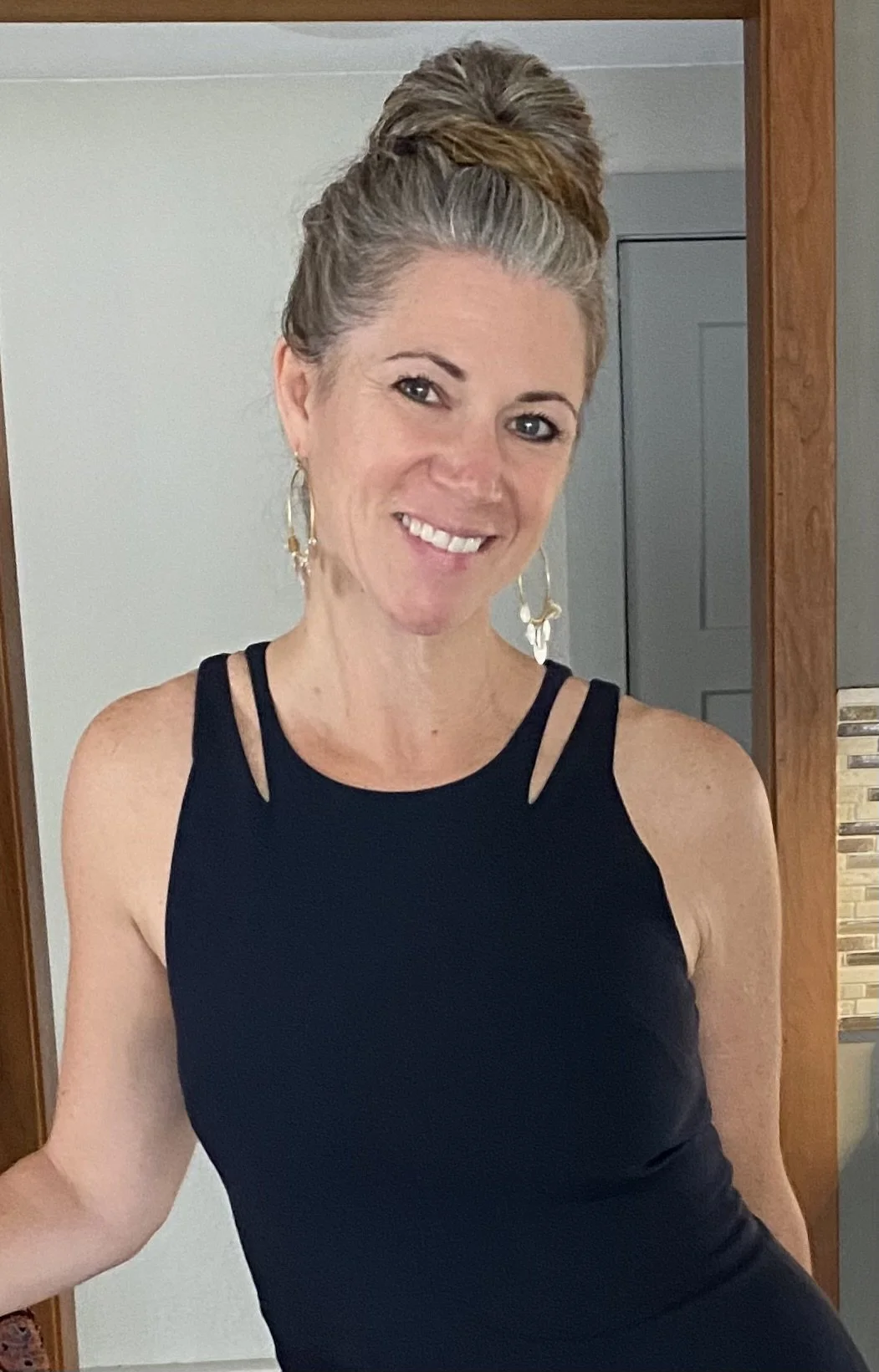
Kimber Olson, MSW, PhD
Enrolled member of the Chiricahua Apache Mimbres
Band Nation
Walking in Two Worlds
Being Indigenous women co-facilitating this work is more than a credential line, it is the foundation of how the medicine moves. We have walked in two worlds. We navigated systems that were not built for us. Things like schools, workplaces, clinical training programs that did not always make room for the ways we know. We have carried what our grandmothers gave us. Each of us grew up with some of our language and ceremonies; both of us are still finding our way back to them. We have done the helping work ourselves, in many of the same systems where Indigenous women are working right now. We know what it costs.
Unlike some groups facilitated by an Indigenous practitioner, this one is Indigenous centered by design. Its framework, its language, and its sequence come from Indigenous ways of knowing, being, connecting, healing and doing. Even having said this, we recognize that there is no “Indigenous Way” but ways that belong to and are connected with individual Tribes, Clans, Bands, and communities. Western evidence travels alongside in its own vessel.
A Sacred Wound Framework™ Cohort for Indigenous Women
Gather · Ground · Go Deep · Release · Rise
Kiva Ceremony
Talking circle
Intentional drawing exercises
Body Mapping
Ancestral Constellation work
Mindfulness exercises, journaling, and moveent
Water Release
Somatic Shifting
The Canopy & Giveaway