
Indigenous Change Management Certificate


A distinct Indigenous model for leading change in real-world complexity.
Most change management training treats change as an operational problem. This certificate treats it as a relational, historical, and cultural one — because in Indigenous and Tribal organizational contexts, that is what it is. Rooted in the Maps of Tutuskya and the Restoring the Bundle Framework©.
Conventional Change Training Falls Short
Most change management frameworks — Kotter, ADKAR, Lewin — were built for western organizational contexts. They treat change as a process to manage, resistance as an obstacle to overcome, and success as a metric to hit. Those tools can be useful. But they were not built for the realities that shape change in Tribal and Indigenous organizations.
In Indigenous contexts, change is not only operational. It is relational, historical, cultural, and lived. The people who resist a change initiative are often the memory of the organization, carrying what was tried before and what it cost. The grief inside an organizational change is not a human resources problem. The colonial history that shaped how a community relates to institutions and authority is not background context. This certificate was built for that reality.
““Trust is not a soft factor. It is the architecture on which change either rests or collapses. Moving at the Speed of Trust is imperative when developing new systems.””
The Maps of Tutuskya · An Indigenous Change Map
At the heart of this certificate is the Maps of Tutuskya; an ancient Apache framework for understanding the web of all things. These teachings are the organizational change map at the center of The Medicine Within and form the process through which this certificate moves. The essential departure from conventional change management: the map and the movement are the same. The framework that names the five dimensions of organizational life also sequences the change journey. Each dimension is both how the organization is assessed and how the change is carried.

guzhugja · Hub of Infinity · Spiritual/Cultural Center
Enter the Work
Before any change is planned, the living cultural center of the organization must be found. Change without a grounded center does not hold. This is where the work begins.
tutuskya · Web of All Things · Cosmological/Nature
Map the Web
Nothing exists in isolation. This dimension maps the full web of relationships the change must move through — rightsholders, land, ancestors, and the generations who will inherit what is built.

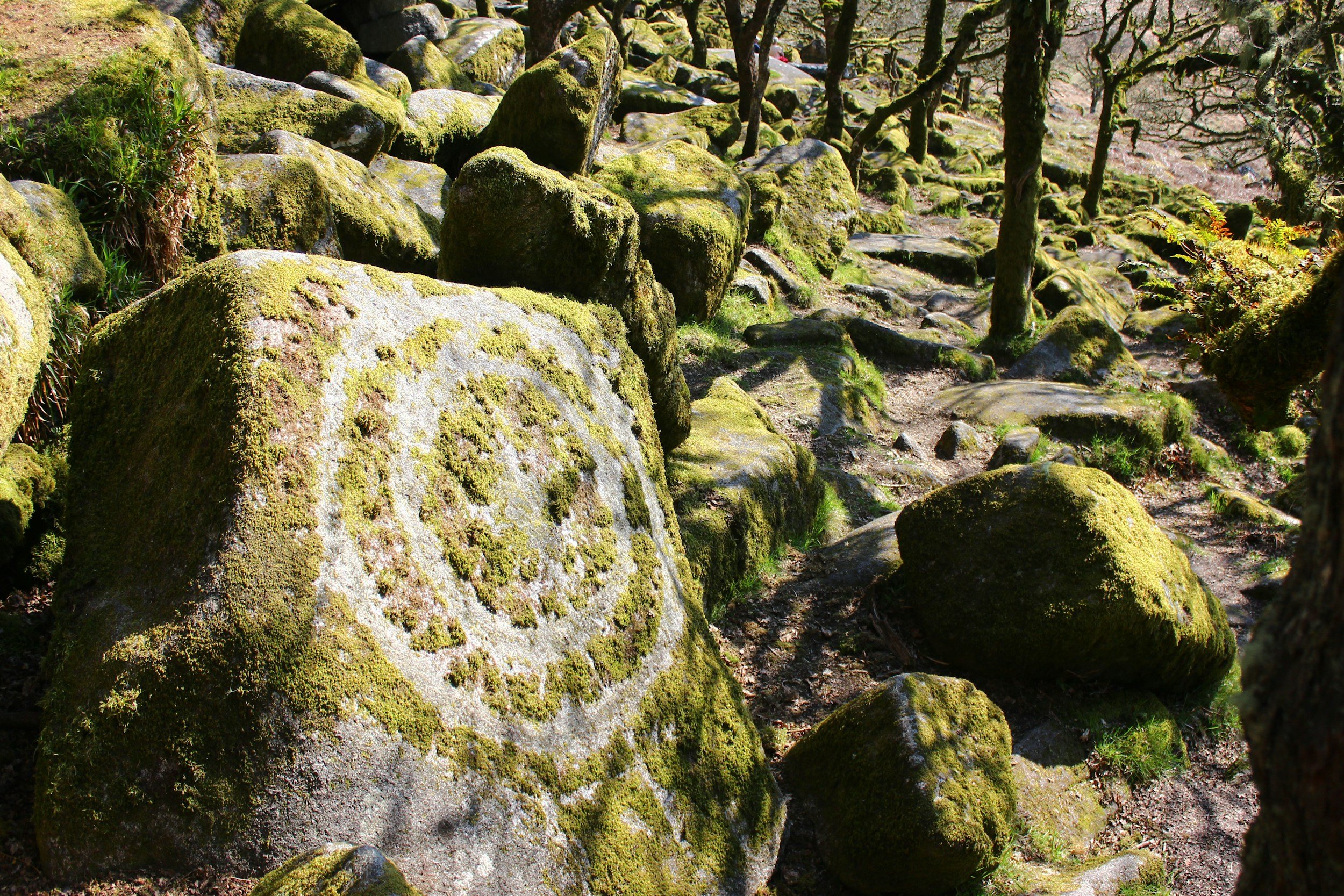
naadinda’i’i · Spiraling Stones · Psychological/Soul
Hold What Is Hard
What looks like resistance is almost always wisdom. This dimension asks change leaders to listen to what resistance knows rather than manage it out of the room.
penseh · Circles of Time · Physical/Work and Art
Realign the Structure
Wisdom without structure is aspiration. This dimension asks whether policies, governance, and daily practice actually reflect the values the organization claims to hold.

intin’ diyi · Directional Energies · Sociological/Relationships
Carry It Forward
Change built around a person collapses when that person leaves. This dimension builds the relational accountability that carries change forward across time and leadership transitions.
This Certificate Is for You If…
Two Formats · Same Certificate
These are not the same experience delivered through different channels. They are genuinely different learning journeys that produce the same credential. Choose the format that matches what your learning context actually calls for.
You lead or manage programs in a Tribal Nation, Indigenous nonprofit, or Indigenous-serving organization.
You have watched change initiatives fail not because the strategy was wrong, but because the relational and cultural conditions were never tended.
You are navigating the tension between compliance-driven funding requirements and the healing-centered culture your community needs.
You want a change framework that puts Indigenous knowledge first and invites western tools in where they serve, not the other way around.
You are ready to do honest work about what makes change hard in your specific organizational context, not just receive a model and a workbook.
-
Contracted on-site delivery · Juniper & Pine travels to your community
The immersive format. The in-person intensive relies on physical presence, shared space, and the relational acceleration that only comes from sustained days together. It is ceremonially held from the first moment to the last.
Day 1 · guzhugja: Ceremony, assessment, and activating the living center
Day 2 · tutuskya + naadinda’i’i: Web mapping, truth-telling, and holding what is hard
Day 3 · penseh + intin’ diyi: Structural alignment, 30/60/90-day pathway, and closing ceremony
-
Open enrollment · per participant · one 3-hour Zoom session per month.
We begin in 2027, meeting the third Friday of the month from 2-5pm EASTERN standard time.
Our dates are January 15, February 19, March 19, April 16, May 21, June 18, July 16 and August 20.
Recordings will be available to participants who are unable to attend a session.
The depth format. The virtual cohort’s learning engine is what you do in the thirty days between sessions, in your organization, with your people, inside the real conditions of your change leadership context. Eight months of practice, held in a community of peers.
Monthly 3-hour Zoom sessions · Opening ceremony every session · Monthly field application assignments · Tutuskya Wellness Assessment at entry and close · 30/60/90-day pathway built across Months 5–6 · Pathway shared with cohort in Month 7 · Certificate completion in Month 8
Early bird: $1,299 · registered 30 days before cohort opens · Regular: $1,599


A working understanding of how the Maps of Tutuskya function as an organizational change framework — and how to apply them in your specific context.
Tools for mapping rightsholders, reading resistance with curiosity, assessing structural misalignment, and building relational accountability that outlasts leadership change.
A completed Tutuskya Organizational Wellness Profile for your organization, administered in ceremony and returned to you in full under your community’s data sovereignty.
A 30/60/90-day action pathway grounded in the Tutuskya change process; not a task list, a direction.
A certificate and a named commitment spoken in circle — witnessed by your cohort and carried back into your organization.
Grounded in Published Scholarship
This certificate is not built on one practitioner’s opinion about what Indigenous change leadership should look like. It is grounded in a growing body of published scholarship at the intersection of Indigenous healing, neuroscience, decolonization, and organizational transformation.
Dr. Olson’s 2025 doctoral dissertation, “Inviting the Sacred Wound into Circle,” and her 2026 article in Frontiers in Public Health (Olson, Erb, Si’al, Piechowski, Riegert & Ranjbar, DOI 10.3389/fpubh.2026.1771109) provide the scholarly foundation for the re-storying and healing-centered frameworks woven throughout this certificate.
Yellow Bird and Luo’s (2025) Decolonization Equation, Jinich-Diamant et al.’s (2025) neuroscience of mind-body practice, and the Two-Row Medicine Approach drawn from Haudenosaunee scholarship anchor the scientific dimensions of the work.
““The lab and the lodge describe the same pattern in different languages. What the science of meditation and kindness is catching up to, Indigenous communities have known for generations.” ”
Participation is intentionally limited. The next virtual cohort starts Friday, January 15, 2027. We meet monthly on the third Friday of the month from 2-5 pm Eastern for 8 months. Recordings are available to participants who miss a session.

Frequently Asked Questions
-
This certificate is designed for leaders and practitioners working in and with Tribal Nations and Indigenous organizations. Participants do not need to be Indigenous. They do need to be genuinely committed to the principles of the Two-Row Medicine Approach — Indigenous knowledge leading, western frameworks in a supporting role — and willing to do honest work about how change actually moves in Indigenous organizational contexts.
-
The Tutuskya Organizational Wellness Assessment is a mixed-methods instrument that measures organizational health across both western metrics and Indigenous protective factors mapped to the five Tutuskya dimensions. All data collected through this assessment is the sovereign property of your Tribal Nation or organization. Juniper & Pine holds no ownership of your data. Individual responses are never shared with other participants or externally. A full Data Sovereignty Agreement is signed before the assessment is administered.
-
The virtual cohort is a community of practice, not an online course. The learning engine is not the Zoom session, but what you do in the thirty days between sessions in your actual organizational context. Each month you leave with a specific field application, bring what happened back to the next session, and share it with a cohort of peers who are doing the same. It produces a fundamentally different kind of learning than self-paced content delivery.
-
For the in-person intensive: participation across all three days, completion of the Tutuskya Wellness Assessment, completion of the 30/60/90-day action pathway, and one named commitment spoken in the closing circle.
For the virtual cohort: participation in all eight monthly sessions, completion of both the baseline and close-of-cycle assessments, completion and sharing of your 30/60/90-day pathway, substantive engagement with monthly field applications, and one named commitment at Month 8.
-
Many participants use professional development, training, or capacity building line items from federal grants including SAMHSA, IHS, ACF, RSA, and other Tribal health and human services funding to cover registration or program fees. Contact us if you need a letter of support or scope of services documentation for a grant administrator.
-
Yes. The Indigenous Change Management Certificate is one entry point into The Medicine Within, which is a three-year healing and leadership journey for Tribal organizations offered by Juniper & Pine Consulting, LLC.
Completing the certificate is not required to enter The Medicine Within, and completing The Medicine Within is not required to take this certificate. They are companion offerings that work well together.